Porta Panigra
 28340 21111
  puli_pantokratora@gmail.com
The Passages of the Fortification
After the construction of the 16th century fortification, the city’s communication with the countryside was through three main passages, in the form of arcades, which were opened at the neck of the bastions, under the low squares, so as to be protected from their cannons. The internal (towards the city) gates of the arcades were shaped as imposing Renaissance facades, adorned with emblems, coats of arms and relief architectural elements, while the external (towards the moat) were simple arched doors, opened in the thickness of the stone sloping cladding.
One of these gates was the gate of the Pantocrator bastion or Porta di Panigrà which led to the southern and western hinterland. The Strada Imperiale, also known as the broad Strata, which was the main transverse road axis of the city after the construction of the expanded bastion fortifications, ended here.
Construction and Chronology
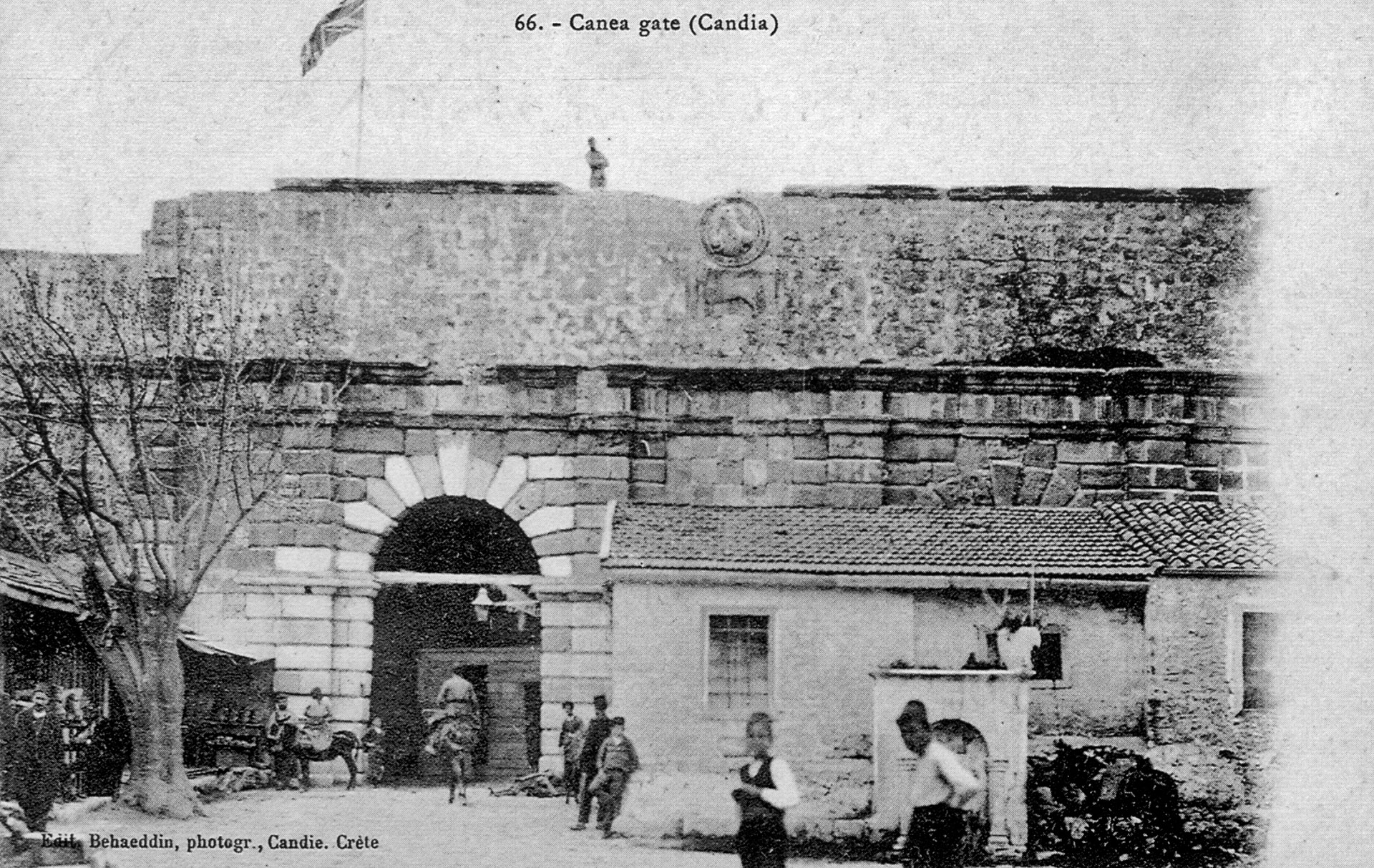
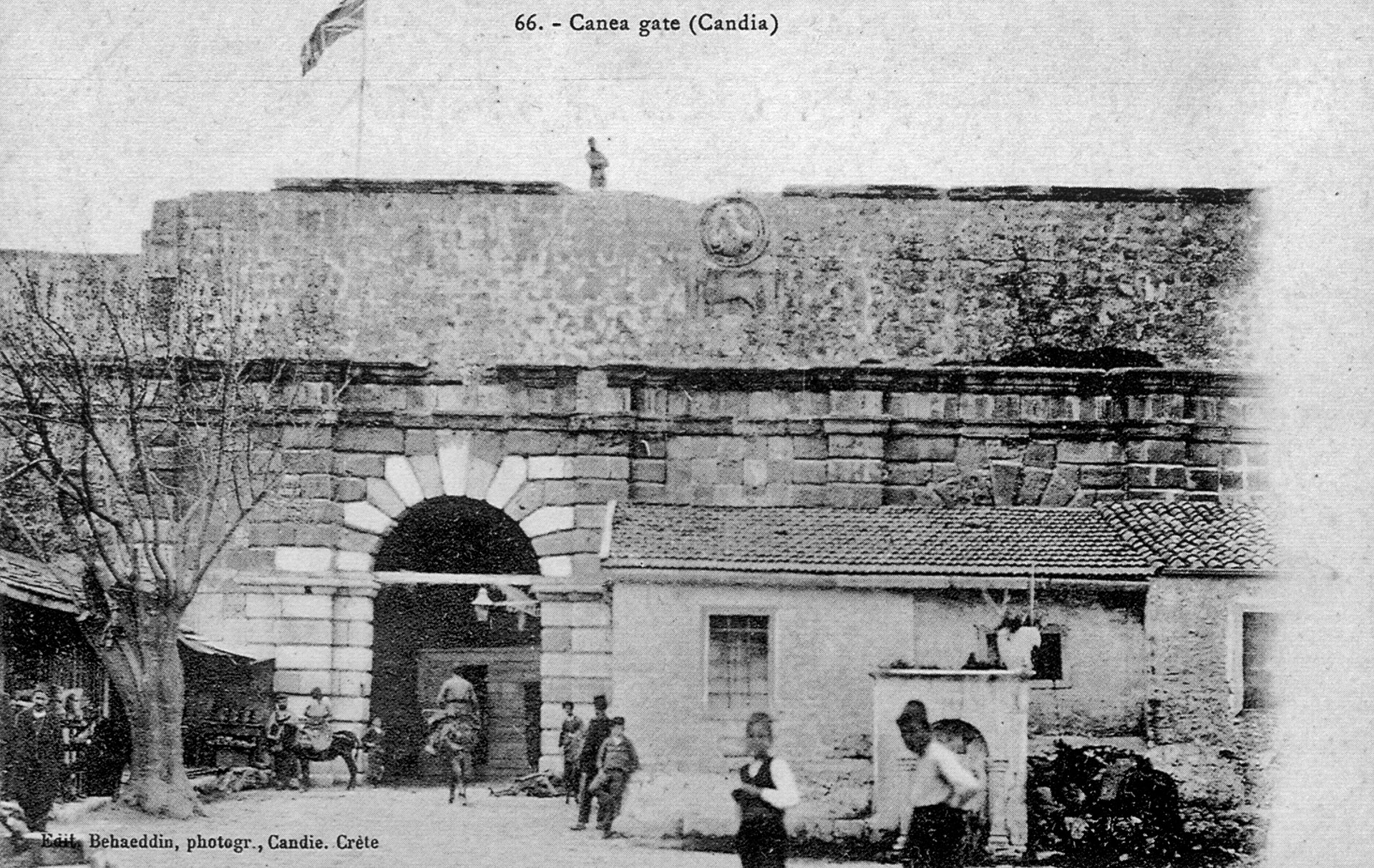
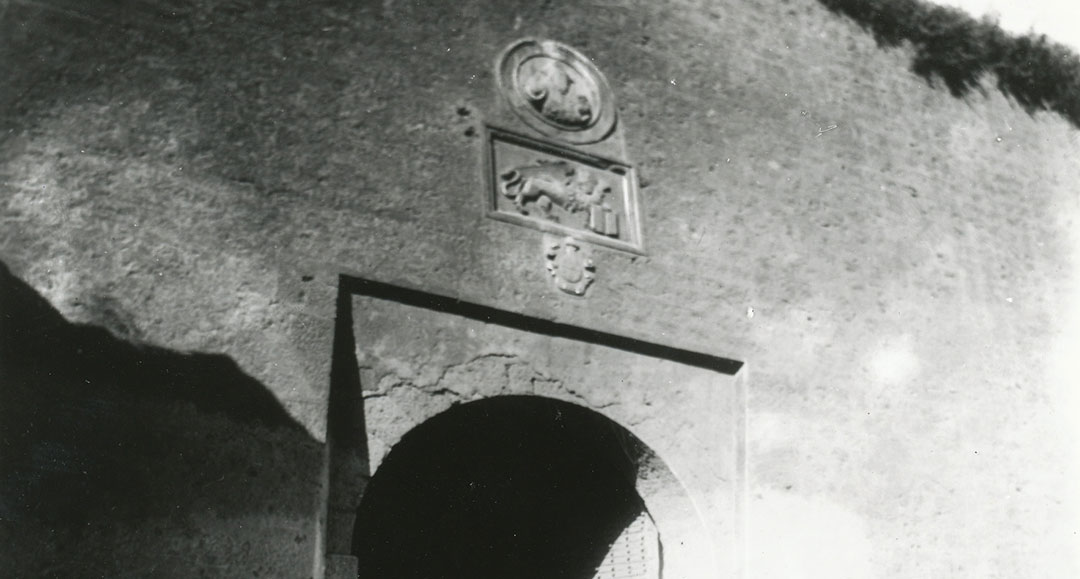
The Gate was constructed during the reign of Doge Pietro Loredan (1567-1570) according to the coat of arms of the outer gate and its construction is attributed to the architect Michele Sanmicheli. The relief slabs with the lions and the medals with the Pantocrator on the two fronts of the gate are preserved intact, with the exception of part of the lion slab on the front of the city, which had been completed earlier.
The Gate, which had problems with sagging, was restored and statically reinforced with funding from the NSRF 2007-2013. The project was carried out by the Municipality of Heraklion under the supervision of the 13th EBA. Since then, the design of the Ephorate of Antiquities of Heraklion began for its conversion into a permanent exhibition space dedicated to the history of the city of Heraklion. The study was prepared by the Ephorate in collaboration with the architect Giorgis Petrakis, and the project was funded by the E.P. Crete within the framework of the NSRF 2014-2020 and 2021-2027.
The Plan
The plan of the Gate presents a peculiarity unique to the entire fortification as it served the movement of soldiers and the urban population at the same time.
Two elongated vaulted corridors started from a single space, of which the first led to the exit from the city, serving the movement of citizens and the second, led with an upward slope to the southern low square, serving the movement of troops and the transport of cannons. In order not to interfere with the two functions, the axes of movement were isolated internally with masonry and two separate entrances were formed on the facade facing the city.
The Facade Towards the City
The monumental facade of the Gate towards the city was entirely lined with carved blocks of gray and yellow hard limestone in an asymmetrical alternation (opera rustica), covered with a very thin coating in the corresponding colors, which gave them gloss and harmonized the color contrast. The pilasters of the two arched entrances are crowned with Doric-type capitals. The central section is structured with successive projections and recesses of the masonry.
Above the central section of the facade there is a cornice. A particularly high parapet, originally coated, completed the composition. On the parapet above the monumental facade is the rectangular plaque with the lion of St. Mark, symbol of the Serene Republic of Venice, and above it the relief medallion with the bust of the Pantocrator and the inscription OMNIPOTENS.
The Facade Facing the Moat
The external (facing the moat) aspect of the Gate is simple. Above the arched doorway, the relief plaque with the lion, the medallion of the Pantocrator, which here is surrounded by the Greek inscription “ΠΑΝΤΟΚΡΑΤΩΡ” and the coat of arms of the Doge Pietro Loredan (1567-1570), have been built in.